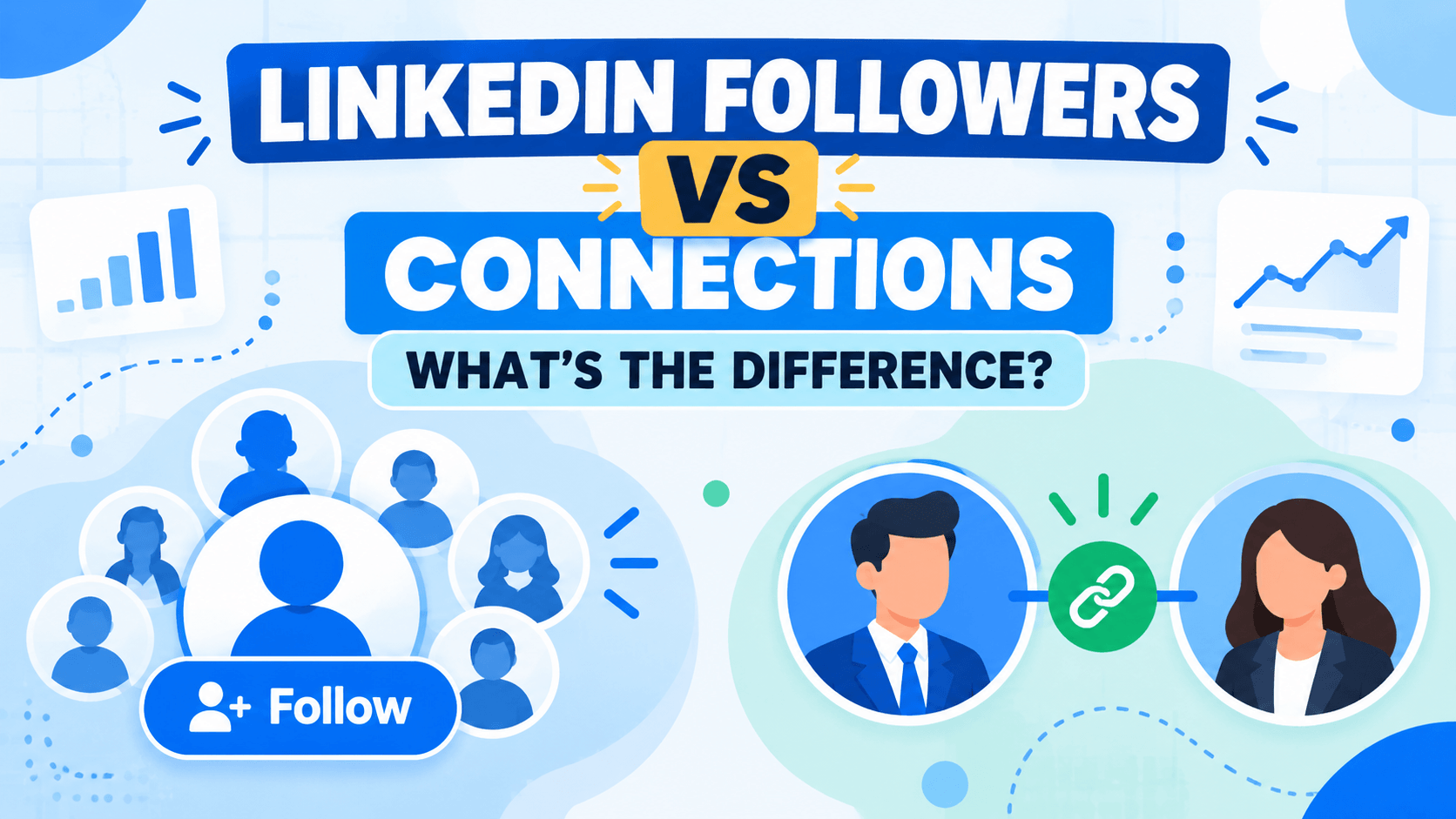
LinkedIn Followers vs Connections: What’s the Difference?
LinkedIn is an important platform for professional networking, personal branding, and business development. However, many users confuse LinkedIn followers with LinkedIn connections. Both can help you build your professional presence, but they serve different purposes.
Understanding the difference between LinkedIn followers and connections can help you decide how to grow your audience, build meaningful professional relationships, and improve your content strategy.
In this guide, we will explain how LinkedIn followers and connections work, compare their key differences, and explore which approach is best for different professional goals.
What Are LinkedIn Followers?
LinkedIn followers are people who choose to receive your public posts, articles, and updates in their LinkedIn feed without necessarily connecting with you directly.
Following is useful when someone wants to stay informed about your professional insights, industry updates, or business content without sending a connection invitation.
For example, a marketing consultant may have followers who regularly read their digital marketing posts, even if they've never worked with them personally.
Benefits of LinkedIn Followers
Wider content visibility: Your public content can reach people beyond your direct professional network.
Personal branding: Followers can help you build an audience around your expertise and industry knowledge.
Thought leadership: Publishing useful, consistent content can help you become a recognizable voice in your field.
Business awareness: Companies and professionals can use content to introduce their knowledge, services, and ideas to a broader audience.
Followers are particularly valuable for creators, consultants, industry experts, and businesses that regularly publish professional content.
What Are LinkedIn Connections?
LinkedIn connections are people who have accepted your connection invitation, or whose invitation you have accepted. This creates a first-degree professional connection between the two members.
Connections help you maintain professional relationships, expand your network, and communicate with people you know or have a relevant reason to contact.
For example, a recruiter might connect with a candidate after meeting at a networking event. A founder might connect with a potential business partner after an introductory conversation.
Benefits of LinkedIn Connections
Professional networking: Build relationships with colleagues, clients, recruiters, and industry professionals.
Direct communication: First-degree connections can generally message each other, subject to account and messaging settings.
Relationship building: Connections can help you maintain relationships with people you have met professionally.
Network development: Your connections can introduce you to second-degree and third-degree contacts.
The most valuable connections support genuine professional relationships rather than simply increasing a number on your profile.
LinkedIn Followers vs Connections: Key Differences
Although followers and connections can both contribute to your professional presence, the main difference is the relationship between the members.
One important detail: LinkedIn members can follow people without connecting with them. When two people connect, they automatically follow each other by default, although either person can subsequently unfollow.
The exact experience also depends on the member’s profile and visibility settings.
Which Is Better: LinkedIn Followers or Connections?
Neither option is universally better. The right choice depends on your professional goals.
When LinkedIn Followers Matter More
Focus on building a relevant follower audience if your priority is to:
Share industry insights with a broad audience.
Establish your personal brand.
Publish educational content regularly.
Increase awareness of your business or professional expertise.
For example, a consultant who publishes weekly articles may benefit from attracting followers who are interested in their expertise.
When LinkedIn Connections Matter More
Focus on relevant connections if your priority is to:
Develop professional relationships.
Network with potential clients and collaborators.
Maintain contact with colleagues and industry peers.
Build relationships with recruiters or prospective employers.
For example, a B2B sales professional may prioritize connecting with relevant decision-makers rather than maximizing their follower count.
Can You Build Both Followers and Connections?
Yes. Followers and connections can complement each other.
A professional can develop relationships with relevant contacts while also sharing public content that attracts a broader audience. This creates opportunities for both relationship-based networking and visibility driven by content.
Focus on a relevant audience and useful professional interactions, rather than treating either metric as a guarantee of business results.
How to Grow Your LinkedIn Followers and Connections
Growing a LinkedIn presence requires consistent activity and a clear professional focus.
1. Optimize Your LinkedIn Profile
Use a professional profile photo, a descriptive headline, and a clear summary of your experience and expertise. Help visitors understand who you are and what you offer.
2. Publish Useful Content
Share industry insights, practical advice, original observations, and relevant professional experiences. Content that addresses your audience’s questions gives people a reason to follow you.
3. Connect With Relevant Professionals
Send personalized invitations to people you know or have a legitimate professional reason to contact. Avoid sending large numbers of irrelevant invitations.
4. Engage With Your Industry
Participate in relevant discussions, leave thoughtful comments, and share useful perspectives. Meaningful engagement can help people discover your profile and expertise.
5. Track Your Progress
Review your audience growth, post performance, profile activity, and relevant business outcomes. Evaluate whether your LinkedIn activity is helping you reach the people who matter to your goals.
If you are exploring tools for managing your broader LinkedIn growth strategy, you can also review the LinkedIn SMM Panel services offered by EasyToPromo. Evaluate available services carefully and consider their terms, limitations, and compatibility with LinkedIn’s rules before making a decision.
Frequently Asked Questions
1. What is the difference between LinkedIn followers and connections?
Followers receive eligible public content in their feed without necessarily being connected to the person. Connections are members who have mutually accepted a connection invitation, creating a first-degree relationship.
2. Can someone follow me without connecting with me?
Yes. Depending on the account’s follower settings, LinkedIn allows members to follow others without sending a connection invitation.
3. Do LinkedIn connections automatically become followers?
When two members connect, they automatically follow each other by default. Either member can unfollow the other later without removing the connection.
4. Are LinkedIn followers or connections more important for business growth?
It depends on your objectives. Followers can help build an audience for public content, while connections help you develop professional relationships. Many businesses benefit from both.
5. Can I increase my LinkedIn followers organically?
Yes. Publish useful content consistently, optimize your profile, participate in relevant professional discussions, and make it easy for people to understand what they will gain by following you. Growth varies with content quality, audience relevance, and other factors.
6. Can I have followers without having many connections?
Yes. When your follower settings allow people outside your network to follow you, your follower count can exceed your number of first-degree connections.
Conclusion
LinkedIn followers and connections serve different but complementary purposes. Followers help you reach people who want to consume your content, while connections establish mutual professional relationships.
If your goal is to build a recognizable professional brand, developing a relevant follower audience can be valuable. If you want to build business relationships, collaborate with industry professionals, or expand your professional network, meaningful connections matter just as much.
Instead of focusing only on increasing one number, create useful content, build relevant relationships, and track the outcomes that matter to your professional goals.